Camping in Thy National Park: Getting Lost, Finding the Perfect Campsite & Learning to Make a Fire
Around midday, we said goodbye to Skagen and started driving towards our next stop: Thy National Park.
After our adventure in Skagen, we were excited about camping in Thy National Park, exploring its wild landscapes, and hopefully finding a peaceful spot to spend the night.
The drive itself was beautiful. The landscapes kept changing along the way, and somehow that made the hour-and-a-half journey feel like part of the experience rather than just getting from one campsite to another.
Our destination was Tvorup Øst, a primitive campsite I had found through Udinaturen. There were shelters as well as space to pitch our own tent, which was exactly what we needed.
We had the location, Google Maps and plenty of daylight. What could possibly go wrong?
As it turns out, finding the campsite was about to become our first adventure in Thy.
Jump to
- Trying to Find Tvorup Øst
- Finally Finding Our Campsite
- Our Packing System Gets an Upgrade
- Exploring and Camping in Thy National Park
- Bunker Museum Hanstholm
- Stenbjerg Landingsplads
- Our Very Unsuccessful Attempt at Making a Fire
- One Last Walk Through Thy
- What We Learned in Thy
- Campsite Review: Tvorup Øst
Trying to Find Tvorup Øst
I used the Google Maps location provided on Udinaturen and followed it directly.
At around five in the afternoon, we arrived and…
There was no possible way in.
According to the map, we needed to continue further to reach the campsite, but every road we tried was blocked by gates. The paths seemed to be accessible only on foot or by bike.
We checked the address again. We tried another road. Then another.
At some point, it started to feel never-ending.
We were tired, confused and, honestly, getting a little annoyed.
Eventually, we stopped the car and went through the Udinaturen page much more carefully.
That was when I noticed something I’d completely missed.
Below the Google Maps section, there was a separate section for parking.
I had only checked the campsite location.
So… new direction.
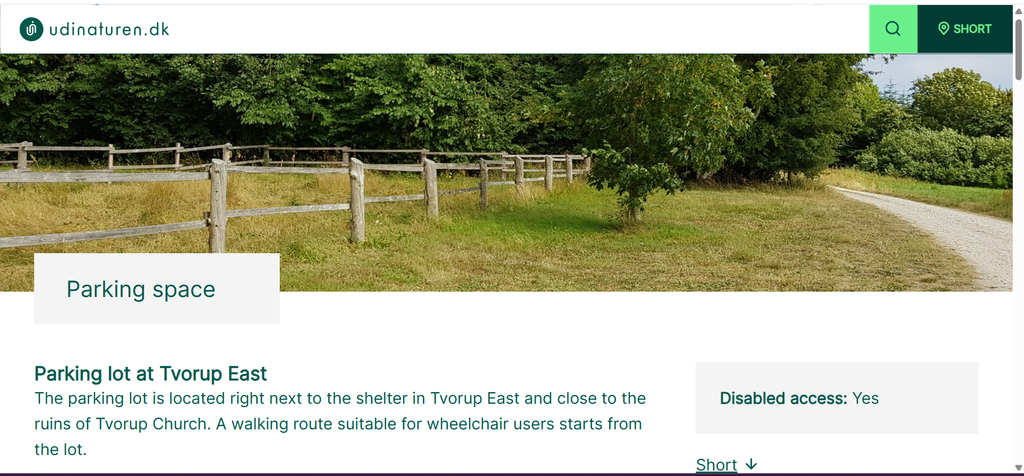
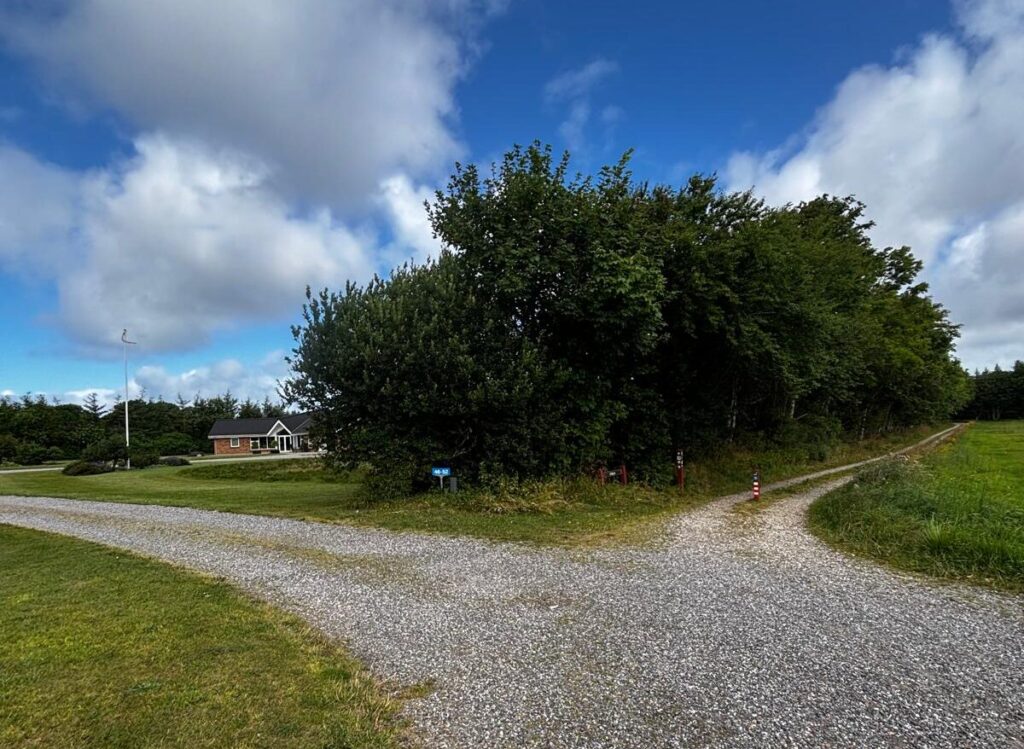
It was in a completely different part of the area, around a 15-minute drive from where we’d ended up.
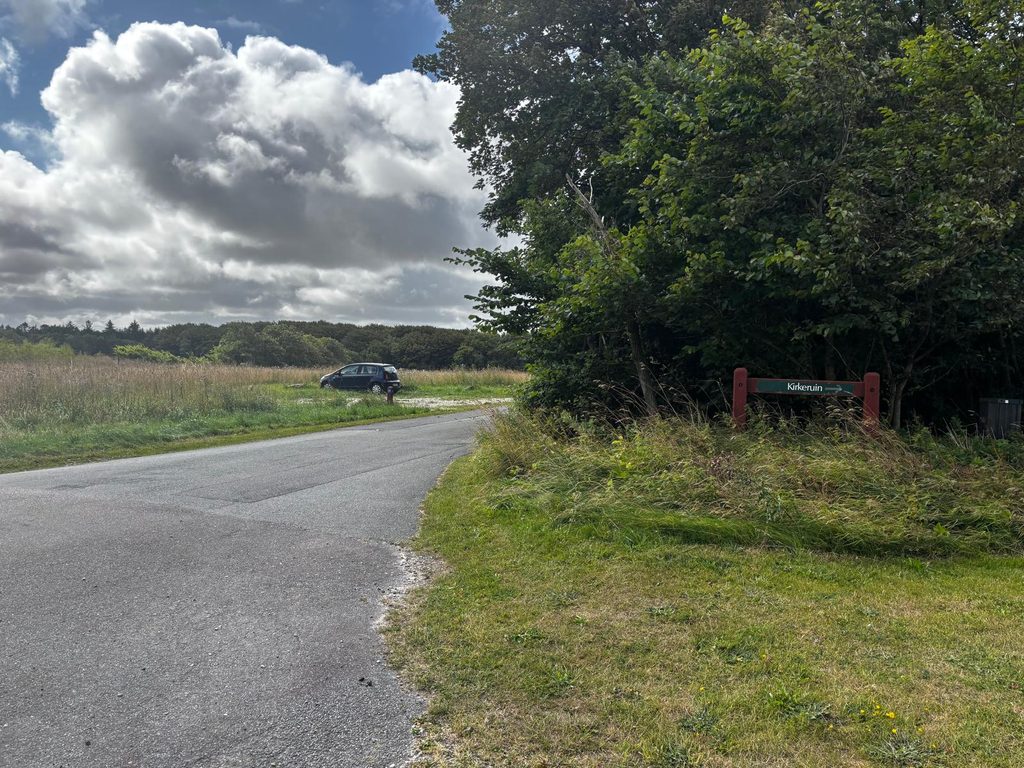
Even when we got there, finding the actual parking wasn’t obvious. There was no big PARK HERE sign waiting for us.
We eventually found the entrance to the campsite because that was marked. Directly opposite it was an open piece of land with stones that looked like it could be a parking area.
But there were no cars.
And no clear parking sign.
So naturally my brain started:
What if this isn’t parking?
What if it’s private land?
What if we come back tomorrow and there’s a fine waiting for us?
We sat there doubting ourselves for a while before finally deciding that yes… this really did look like the parking area.
We parked, got out of the car and walked towards the campsite.
And when we reached it, I was shocked.
Finally Finding Our Campsite
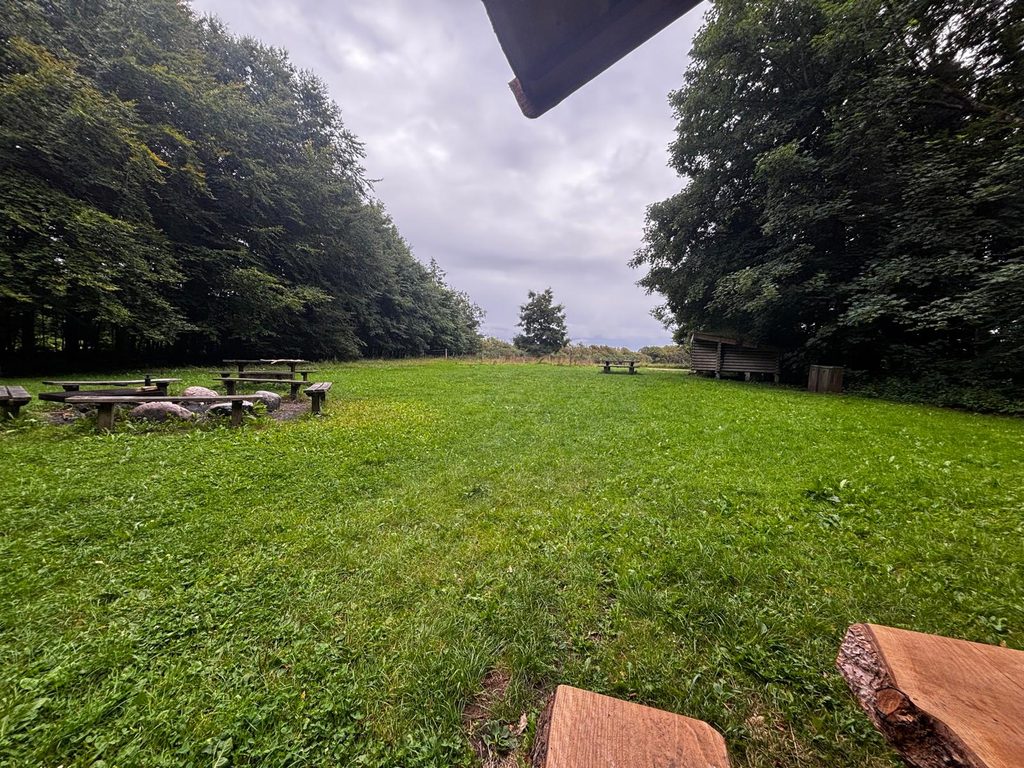
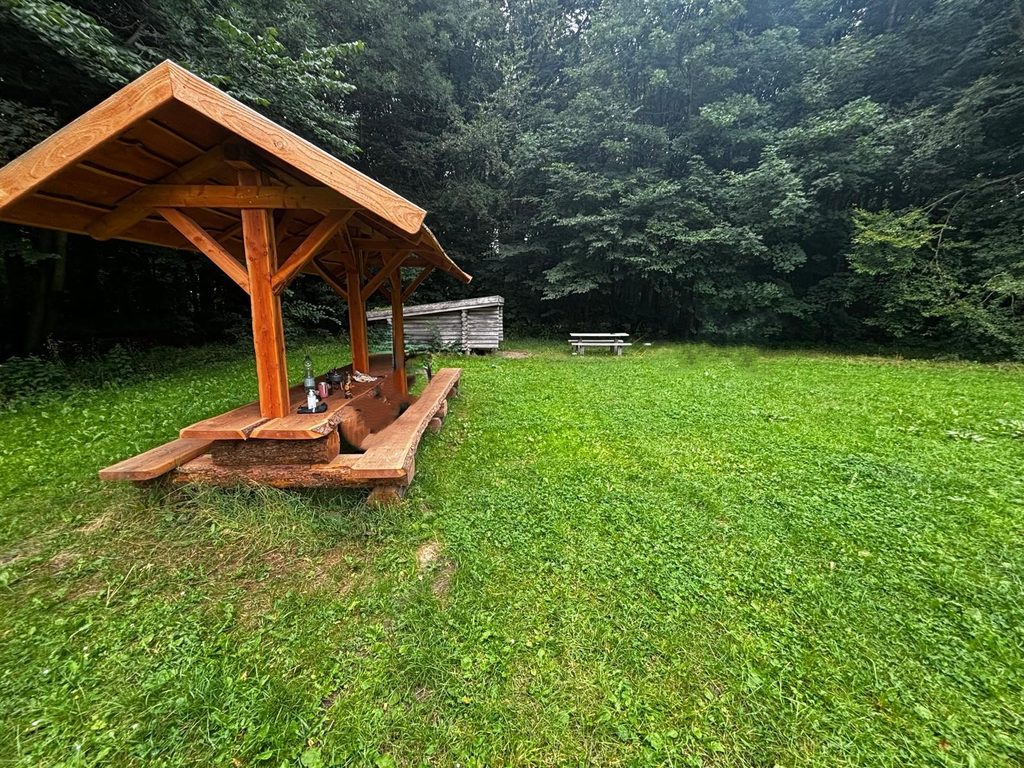
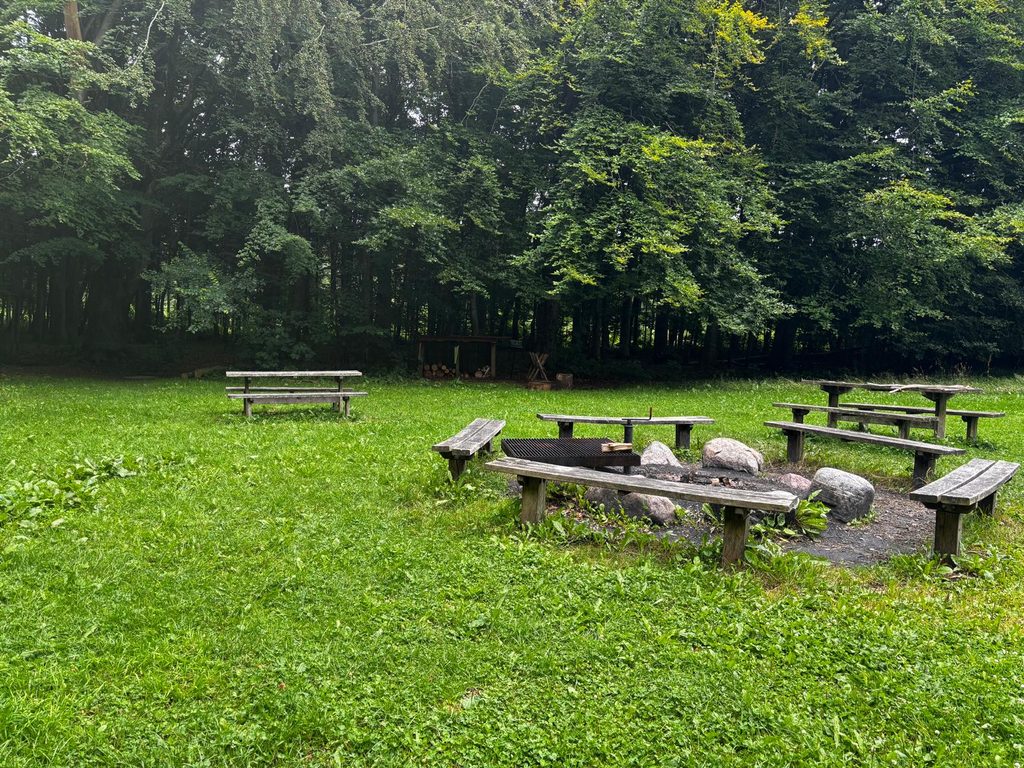
After all that confusion, the campsite was beautiful.
Everything was green and surrounded by forest.
There were two shelters, a toilet, water and a large fire area. When we visited, there was also chopped wood and tools available around the fire area. And thankfully, the parking wasn’t far away.
I walked into the forest behind the campsite almost immediately.
The landscape was completely different from our campsite in Skagen. Instead of sand dunes and coastal vegetation, there were tall trees and deep green surroundings.
Then I noticed something between the trees.
Three horses, quietly eating.
It was such a peaceful scene.
We had also seen signs for horse-riding routes around the area, and over the next couple of days we noticed quite a few people exploring Thy with their horses.
There was something else that surprised me.
Before coming here, I had somehow imagined a national park as somewhere you formally enter, maybe through a gate or visitor entrance.
Apparently, I had invented an entrance to Thy National Park in my head. 😄
Thy wasn’t like that at all. We found ourselves travelling through forests, open landscapes, trails and small roads rather than arriving at one obvious attraction.
It felt much more like moving through a landscape than entering a specific place.
Our Packing System Gets an Upgrade
By around six, we were happy with the campsite and went back to the car to get our equipment.
But this time, we had learned from Skagen.
No more carrying ridiculously heavy boxes full of things we didn’t immediately need.
We moved the heavier camping equipment into our backpack and kept only essentials such as our pot, kettle, gas and snacks in the box.
We had also changed how we packed our clothes.
Previously, we’d carried all our clothes to the campsite. After Skagen, we realised there was absolutely no reason to do that. If you’re wondering what else we brought on our trip, I’ve shared everything in our car camping checklist for Denmark, including a printable checklist you can use for your own adventure.
Now most of our clothes stayed in the car, and we only carried what we needed for that night and the following morning.
The same applied to food.
Instead of carrying an entire bag of pasta or rice, we’d take only the amount we expected to use that day and restock from the car before moving to the next campsite.
Such a small change, but it made everything so much easier.
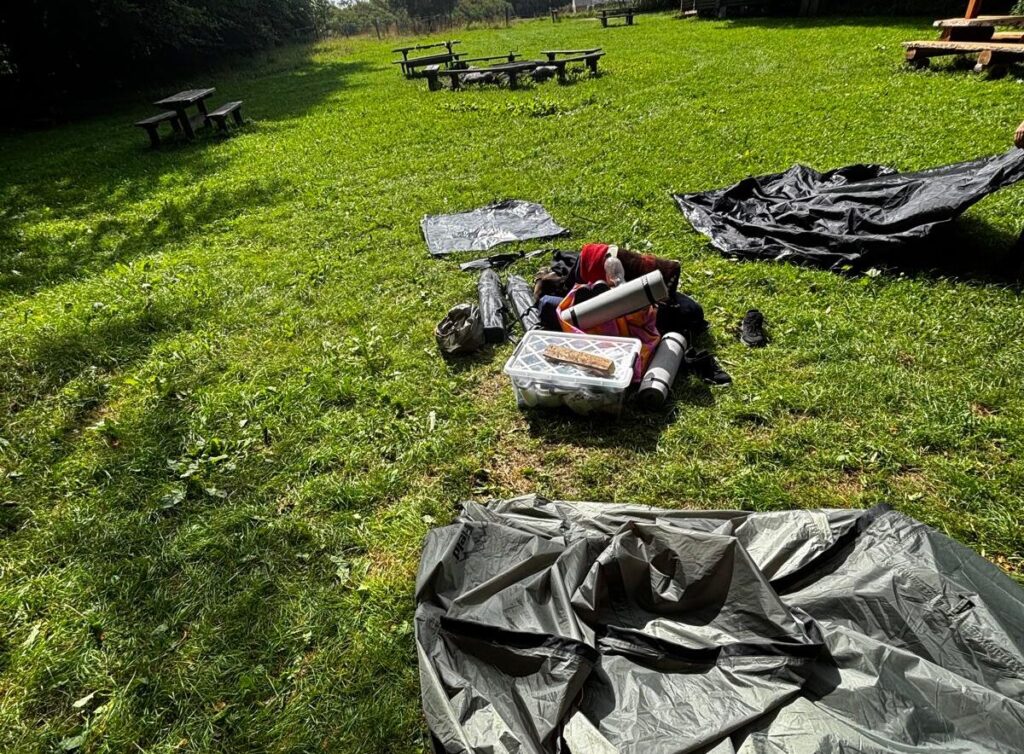
We set up the tent and settled in for the evening.
The campsite was incredibly peaceful, and after the confusion of finding it, sitting there surrounded by forest felt even better.
We cooked dinner and simply enjoyed being there.
Exploring and Camping in Thy National Park
The next day, we took the car and started exploring more of the area.
This was when the west coast of Denmark really started to fascinate me.
There’s something mysterious about it.
The coastline is wild, but then you have these enormous open landscapes that seem to continue forever. It was summer, but the sky was grey and the wind was strong.
And somehow…
it was perfect.
One of the things I found most interesting was how differently people were travelling.
We saw cyclists fighting their way through the wind on completely open roads. Backpackers walking with everything they needed. People travelling with horses.
Coming from the type of travelling I knew before, cities, planes, taxis and public transport, seeing all these different ways of moving through a landscape felt incredibly freeing.
Nobody seemed to be in a hurry just to reach the next attraction.
The journey itself was part of it.
Bunker Museum Hanstholm
The west coast also has another layer that I find fascinating: its World War II history.
You can still find bunkers around the Hanstholm area, and of course, since I love historical places, I wanted to explore them.
We visited Bunker Museum Hanstholm, and this is one place I would genuinely recommend if you’re interested in history.
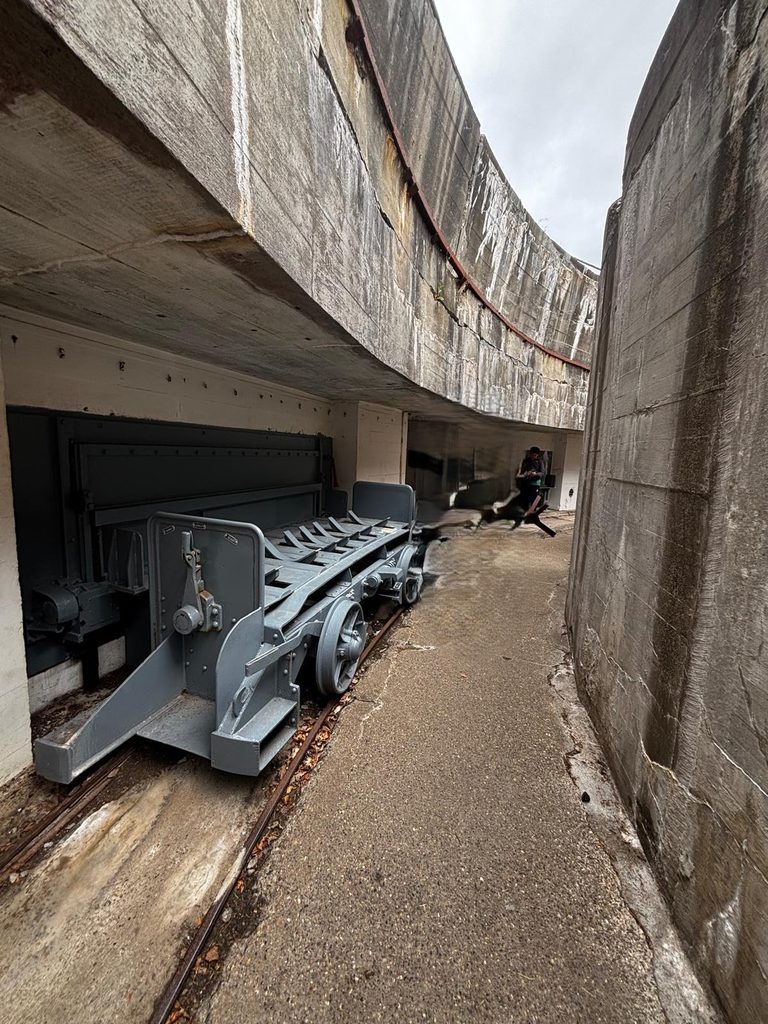
Walking through the bunkers made the history feel much more real to me than simply reading about it.
You’re not just looking at photographs or objects behind glass. You’re actually walking through part of the fortification and seeing how enormous the structures were.
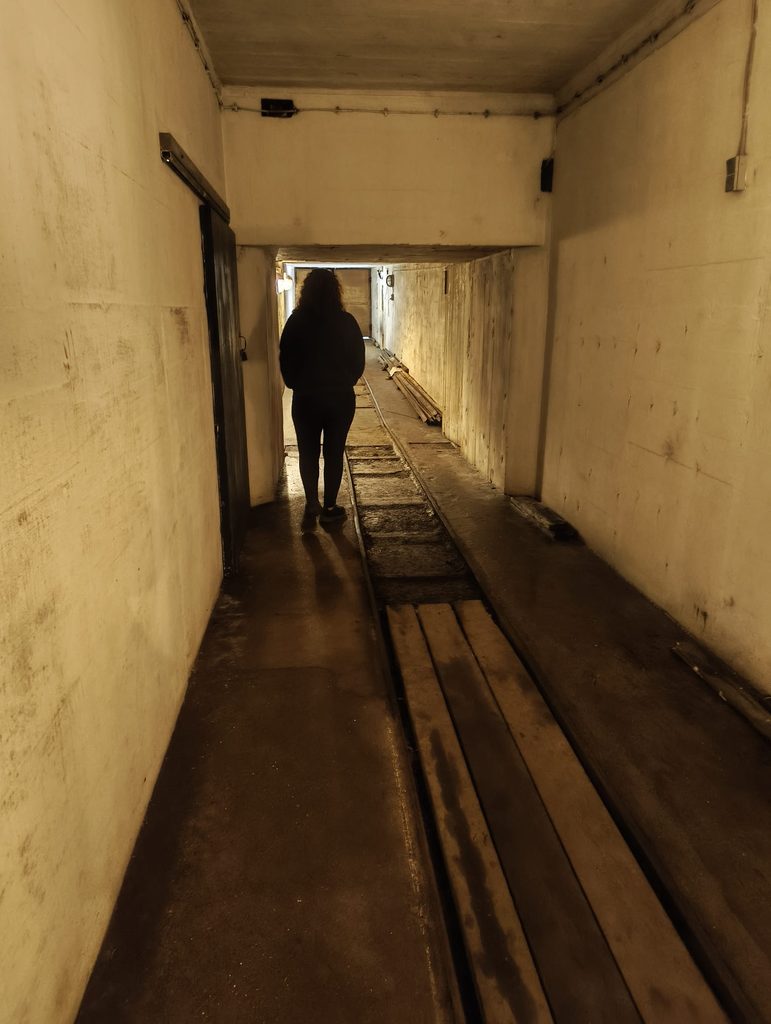
It also made me look at the surrounding landscape differently.
Suddenly, what looked like a peaceful stretch of the Danish west coast had another story hidden underneath it.
Stenbjerg Landingsplads
Our next stop was Stenbjerg Landingsplads.
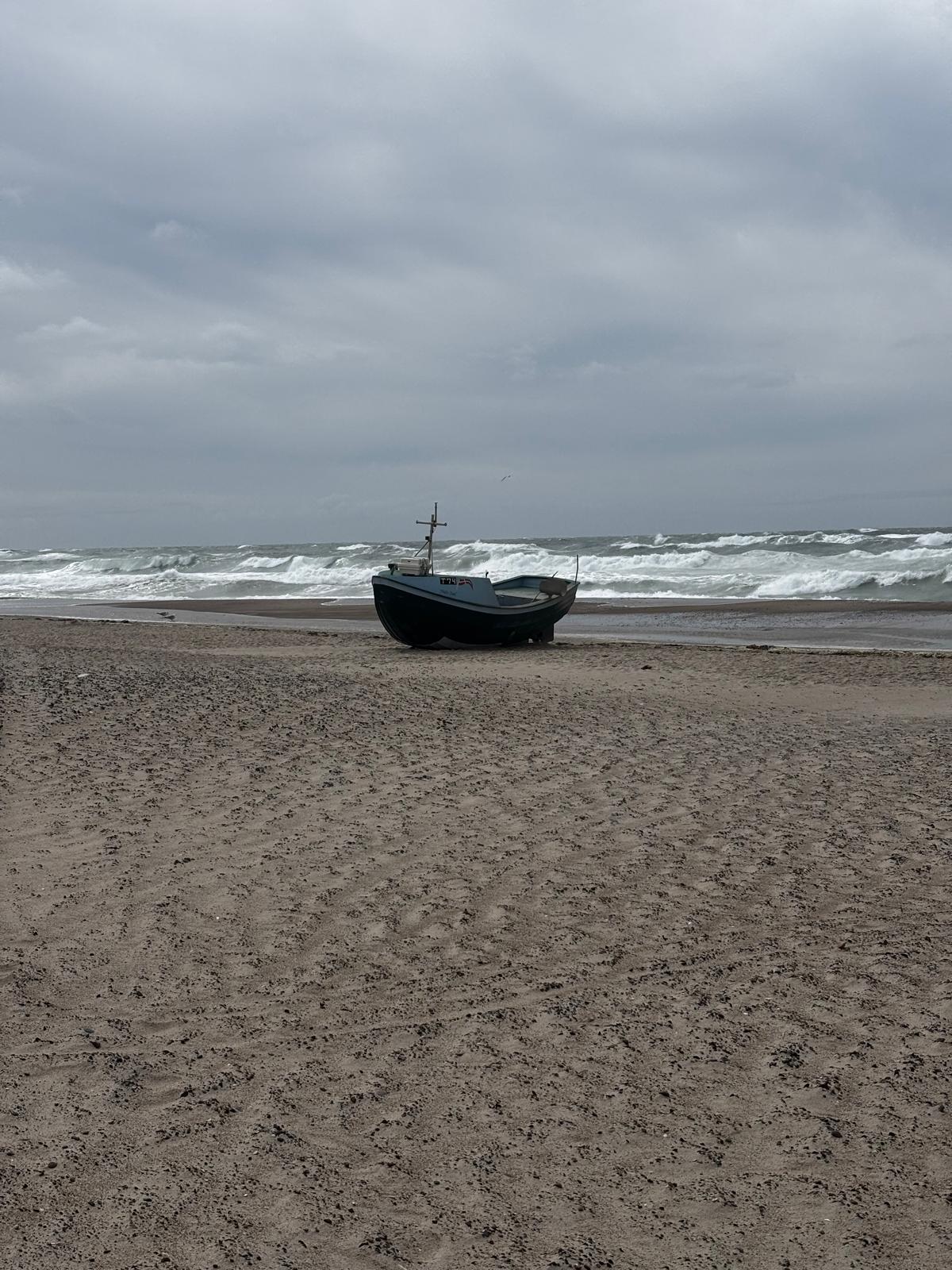
This historic landing site was used for coastal fishing for centuries, with boats pulled directly onto the beach. Commercial fishing there ended in 1972, but the characteristic white fishermen’s equipment houses have been preserved.
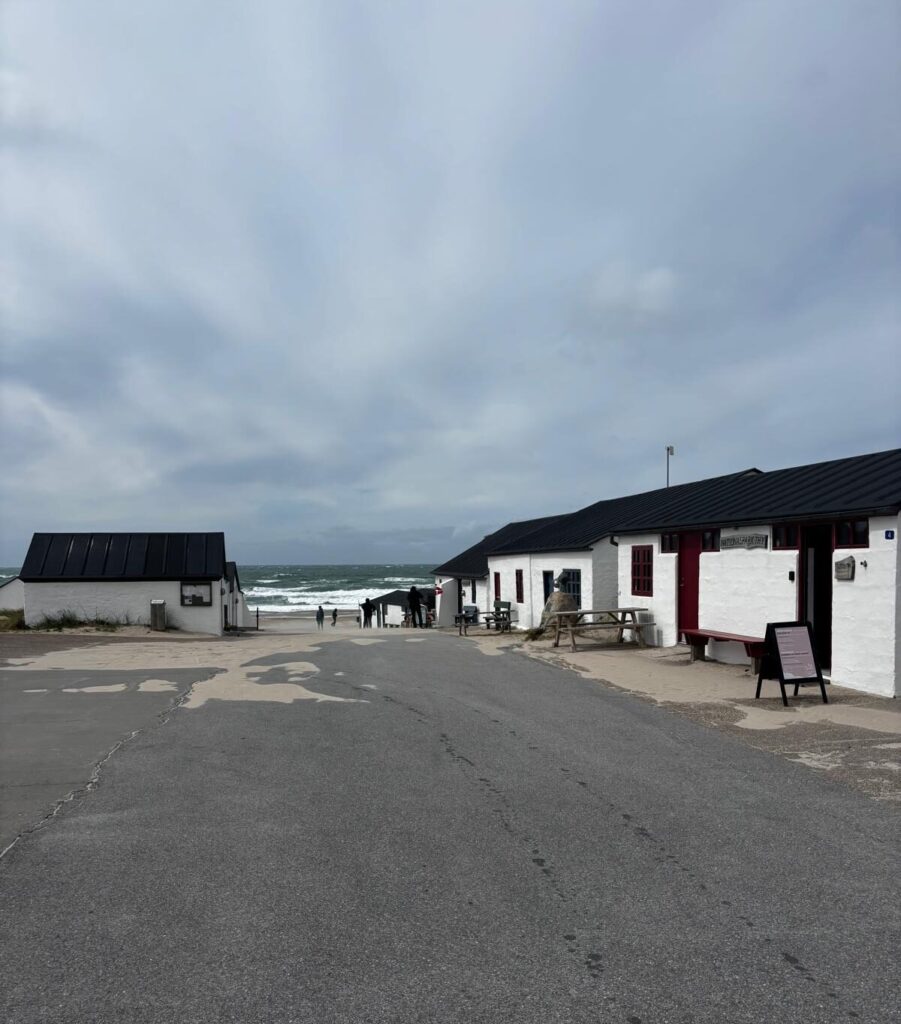
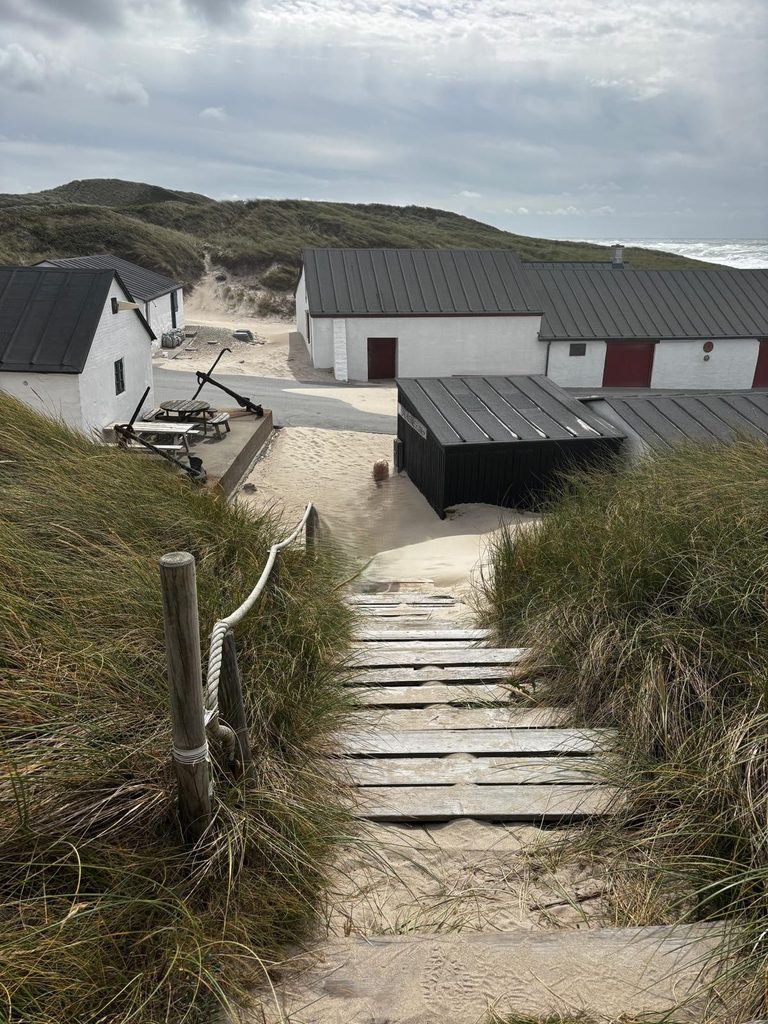
This was something I really enjoyed about Thy.
Within one day, we’d gone from forest and horses to World War II bunkers and then to an old fishing site beside the North Sea.
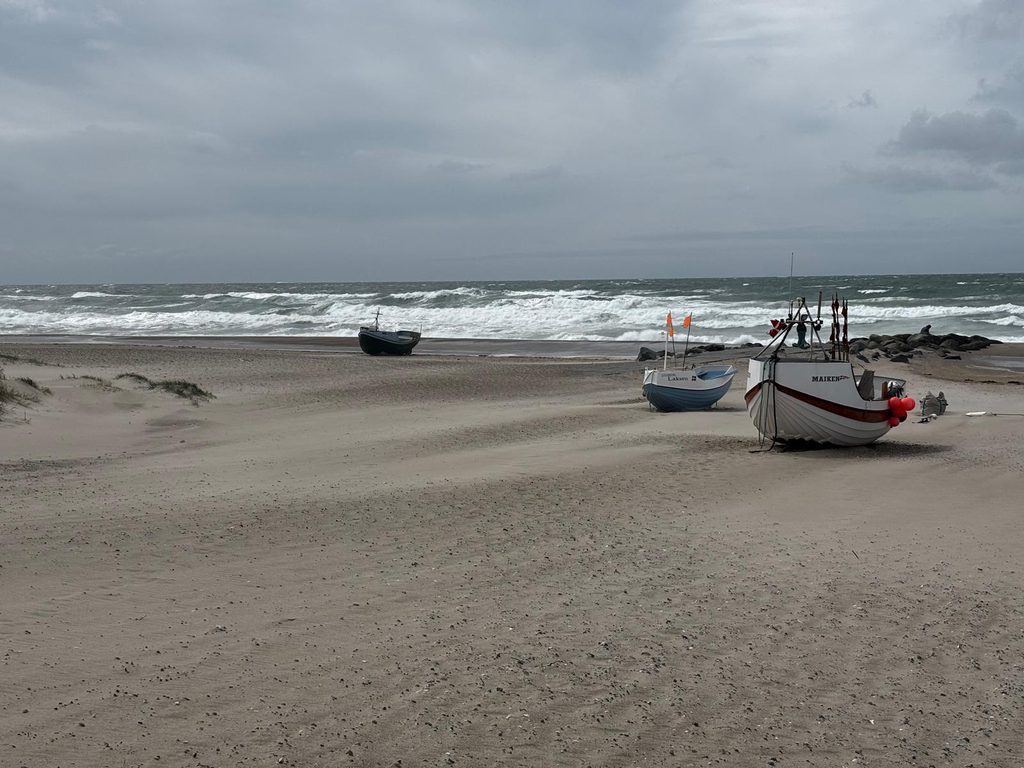
The landscape kept changing.
Our Very Unsuccessful Attempt at Making a Fire
Eventually, we returned to the campsite, rested for a while and decided it was time for one of those perfect camping evenings:
A fire.
Sausages.
S’mores.
Nature.
Very romantic.
There was just one small problem.
It had been raining.
The pile of firewood was completely wet.
But apparently we were feeling very confident about our newly developed outdoor skills, because we decided:
We’ll make the fire using only matches.
No lighter.
No fire starter.
Just us, some matches and soaking wet wood.
After approximately one hour, nature had taught us another lesson:
Wet wood + strong wind + matches = absolutely no fire.
Eventually, slightly defeated, we walked back to the car.
We had lighter fluid there.
So yes…
we cheated.
Even with that, it still took quite a bit of effort, but eventually:
FIRE!
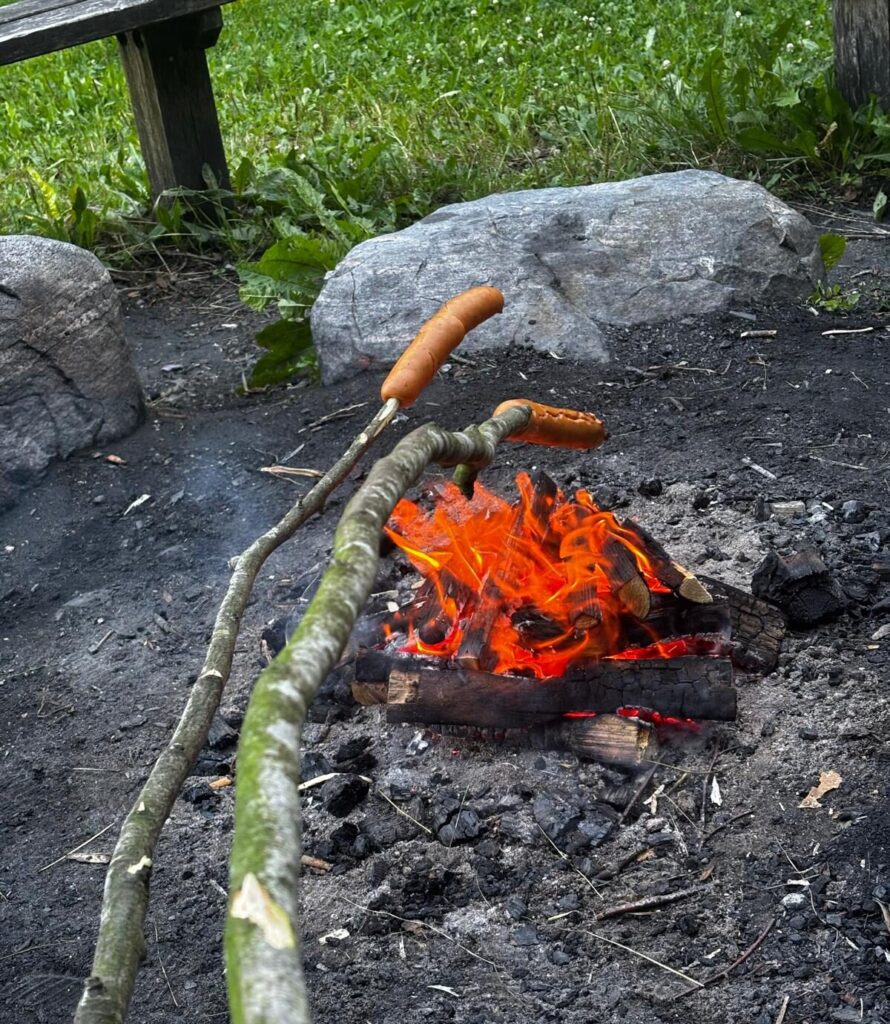
It wasn’t exactly the beautiful, clean campfire we’d imagined.
The wet wood created so much smoke that at times we could barely sit near it.
But we found some drier pieces, kept working at it and eventually had something resembling the romantic campfire we’d planned.
Then came the sausages.
And the s’mores.
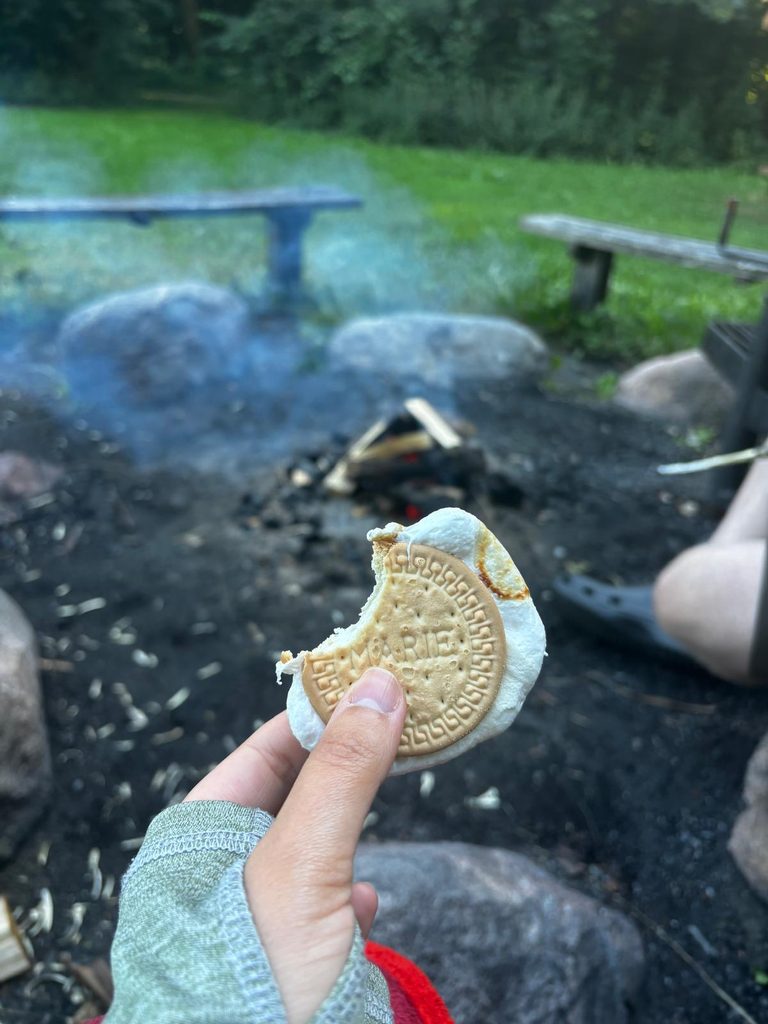
Once we were full and warm, we were finally able to laugh about the whole thing. 🙂
One Last Walk Through Thy
The following morning, it was time to continue our journey.
Before packing, though, we went for one last walk around the campsite.
The area had such an interesting mix of landscapes. Different vegetation, forest paths and long hiking routes surrounded us.
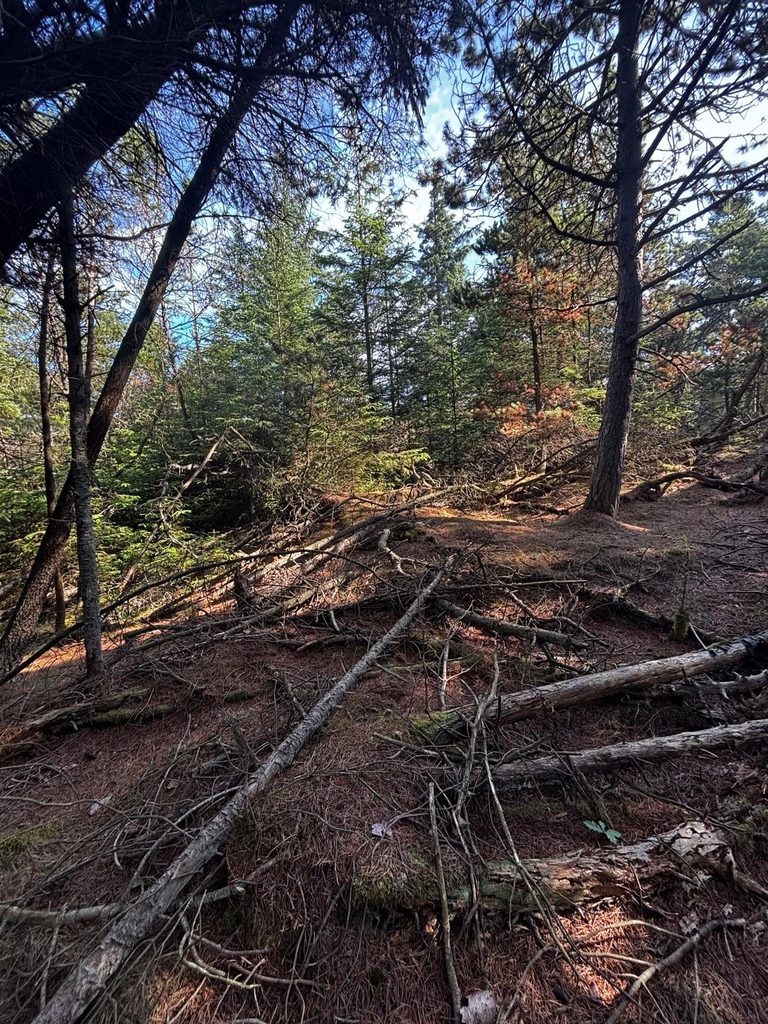
And this time, packing was noticeably easier.
Only a few days into our summer trip, we’d already gone from carrying far too much equipment in awkward boxes to having a much simpler system.
Small progress.
But progress. 😄
We packed the car, took one last look around and said goodbye to Thy National Park.
What We Learned in Thy
This stop taught us quite a lot:
- Always check the parking information separately when using Udinaturen. The campsite pin isn’t necessarily where you should leave your car.
- Keep most clothes and supplies in the car when you don’t need them at the campsite.
- Carry only the amount of food you actually need for that day.
- Backpacks make carrying heavy equipment much easier.
- Don’t assume a national park has one obvious entrance.
- Take time to explore beyond the campsite itself.
- And perhaps most importantly… Matches are not a personality trait. Bring something to help start the fire. 😂
Campsite Review: Tvorup Øst
After the difficult start, this ended up being one of those places that was absolutely worth finding.
What I liked
- Peaceful forest setting
- Two shelters
- Space for our own tent
- Toilet
- Water
- Fire area
- Parking relatively close once you find the correct place
- Hiking and horse-riding routes nearby
- A great base for exploring Thy National Park
Things to consider
Finding the correct parking area was confusing for us, especially because we initially followed the campsite pin rather than checking the separate parking information.
If you’re carrying camping equipment, I would definitely check both the campsite and parking locations before you arrive.
Also, check the current shelter information before your trip. Udinaturen currently lists one of the two shelters at Tvorup Øst as bookable and the other as first-come-first-served, while tent camping is also permitted.
Would I camp here again?
Yes.
The journey there tested our patience a little, but once we found the campsite, it gave us exactly what we were looking for: forest, quiet, simple facilities and easy access to exploring Thy.
Rating: [5 / 5]
Next Stop…
We packed the car again.
By now we’d survived a last-minute campsite change in Skagen, learned how not to pack, got lost trying to find a campsite in Thy, and spent an hour attempting to light wet firewood with matches.
Clearly, we were becoming professionals. 😄
Next stop: VestJutland →
Hi, very useful information.